

President Xi Jinping declared China’s “great rejuvenation” unstoppable on Wednesday as he used the country’s largest-ever military parade to hint at reunification with Taiwan and to flaunt advanced weapons designed to rival American power.
Continue reading “Xi Jinping hails ‘unstoppable’ China as Trump accuses Beijing of conspiring against US”
Featured image: Mrs. Agnes Driscoll
The collaboration between the Army and the Navy on Japanese Diplomatic crypto‑systems did not extend to the Japanese Military (Army and Navy) crypto‑systems. A secret divulged to a third party is no longer a secret. The U.S. Navy withheld all details of its success with Japanese Naval crypto‑systems from the Army and in turn made no inquiries about the Army’s progress with Japanese Army crypto‑systems. When the Japanese Army invaded Manchuria in 1931 the U.S. Navy intercept station at Peking (manned by Marine Corps operators) went to watch‑and‑watch condition and obtained a wealth of tactical intercepts. These were all turned over to the War Department for exploitation ‑ and no embarrassing questions were ever asked.
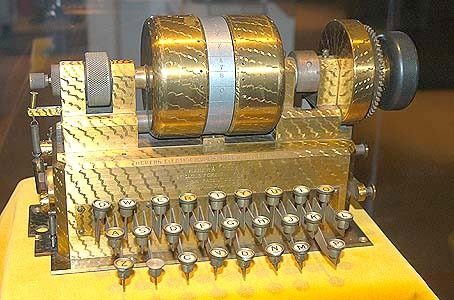
Featured image: Hebern Cipher Machine
By 1931 the Navy had tested and discarded the double‑printer model of the Hebern Cipher Machine and had placed an order for 30 single printer Hebern Cipher Machines for service tests. An early form of “strip cipher” was introduced by the Navy as a step in the transition from codes to ciphers and to serve as an interim system until the Electric Cipher Machine could be perfected. The Army took a dim view of the Electric Cipher Machine at that time and attempted to induce the Navy to abandon it: under the circumstances “collaboration” was impossible.
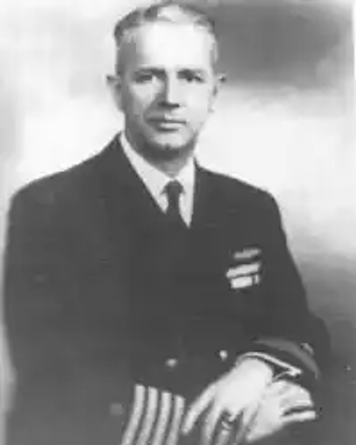
Featured image: Captian Laurance Safford, USN
This five-part series is Captain Laurance Safford’s version of pre-Pearl Harbor communication intelligence history. This paper was prepared between 21 and 27 March, 1952.
One of the first U.S. Naval Officers to specialize in the new field of cryptology, CAPT Safford headed the newly‑established Cryptographic Research Desk in the (OPNAV) Code and Signal Section from 1924‑1925. His efforts to improve U.S. communications security aided substantially in the development of machine ciphers. During World War II he served as Assistant Director of Naval Communications for Cryptologic Research. From 1949 through 1951 was Special Assistant to the Director, Armed Forces Security Agency. In 1958 Congress awarded him $100,000 for his wartime inventions in lieu of patents. He is remembered as one of the pioneers of naval cryptology.
Continue reading “A Brief History of Communication Intelligence in the United States (Part 1 of 5)” Station HYPO