Search

Station HYPO

Celebrating the Past, Present and Future of Navy Cryptology

Month

April 2025

President Franklin Roosevelt Died

On April 12 1945, Franklin Roosevelt died. One month later, USS Coral Sea (CV/CVB/CVA-43) was renamed in his honor. In 1950, the Roosevelt became the first carrier to take nuclear weapons to sea. The weapons would have been delivered by P2V Neptune bombers launched with “jet-assisted take-off” (JATO). Like the Doolittle raid, there would have been no way for the carrier to recover the Neptunes after a strike because the bombers lacked a tailhook, so they would have had to ditch or landed ashore.

Source: U.S. Naval Institute


USS Franklin D. Roosevelt (CVB-42) was laid down on 1 December 1943, at the New York Navy Yard, Brooklyn, N.Y.; launched on 29 April 1945; sponsored by Mrs. Anne P. Towers, née Pierette, wife of Adm. John H. Towers, Commander Air Force, Pacific Fleet, and by the ship’s honorary sponsor, First Lady A. Eleanor Roosevelt; renamed Franklin D. Roosevelt to honor the late President Roosevelt on 8 May 1945, marking the first time that the Navy made an exception to the traditional naming of fleet aircraft carriers for battles or famous ships; and commissioned on 27 October 1945, Capt. Apollo Soucek in command.

USS Franklin D. Roosevelt (CVB-42) set out on her shakedown cruise with Large Carrier Air Group (CVBG) 75 embarked into the Caribbean and South Atlantic (8 January–19 March 1946). USS Franklin D. Roosevelt (CVB-42) called at Rio de Janeiro, Brazil (1–11 February) to represent the United States at the inauguration of Brazilian President Eurico G. Dutra, who boarded the ship for a short cruise. Douglas H. Fox in the meanwhile refueled briefly at Trinidad in the British West Indies on 26 January and Pernambuco in Brazil on 31 January.

USS Franklin D. Roosevelt (CVB-42) made the ship’s maiden deployment when she sailed with CVBG-75 to the Mediterranean (8 August–4 October 1946). While the ship lay anchored at Lisbon, Portugal, on 18 August she welcomed USS Houston (CL-81) as the light cruiser also slipped up the Tagus River into the port. As USS Franklin D. Roosevelt (CVB-42) stood back out to sea she launched 78 aircraft over the task force in an impressive display of naval air power. USS Franklin D. Roosevelt (CVB-42) was reclassified to an attack aircraft carrier (CVA-42) on 1 October 1952. The ship next took part in Longstep in the Eastern Mediterranean.

On February 1957, USS Franklin D. Roosevelt (CVA-42) sailed to the Gulf of Maine for cold-weather tests of catapults, aircraft, and other carrier equipment, including the SSM-N-8 Regulus (Regulus I) cruise missile. In July she sailed for the first of three post conversion cruises to the Mediterranean through 1960. USS Franklin D. Roosevelt (CVA-42) and CVG-1 deployed once more to the Sixth Fleet in the Mediterranean (14 September 1962–22 April 1963). The ongoing fighting in the Vietnam War compelled the Navy to rotate carriers through deployments to the Western Pacific. FUSS Franklin D. Roosevelt (CVA-42) and CVW-1 thus turned toward the war. The ship returned to the line on 1 October 1966, but as she resumed the action and began launching the day’s strikes, a blade on the propeller on the No. 1 shaft broke off, hurled itself across the propulsion system and tore away part of the housing for the No. 2 drive shaft, damaging its screw.

USS Franklin D. Roosevelt (CVA-42) was decommissioned while she lay moored starboard side to Pier 3 at the Naval Inactive Ship Maintenance Facility at Norfolk Naval Shipyard, Portsmouth, Va., and also was stricken from the Naval Vessel Register, during the forenoon watch on 1 October 1977.

Source: history.navy.mil

April 11, 1945, Kamikaze Struck USS Missouri

On April 11, 1945, a kamikaze struck USS Missouri during the Battle of Okinawa, leaving his plane’s machine gun impaled in the flash suppressor of a Bofors 40mm. The attack caused minor damage and no casualties other than the Japanese pilot who was given a military funeral by the crew.

China’s Military Buildup Threatens Indo-Pacific Region Security

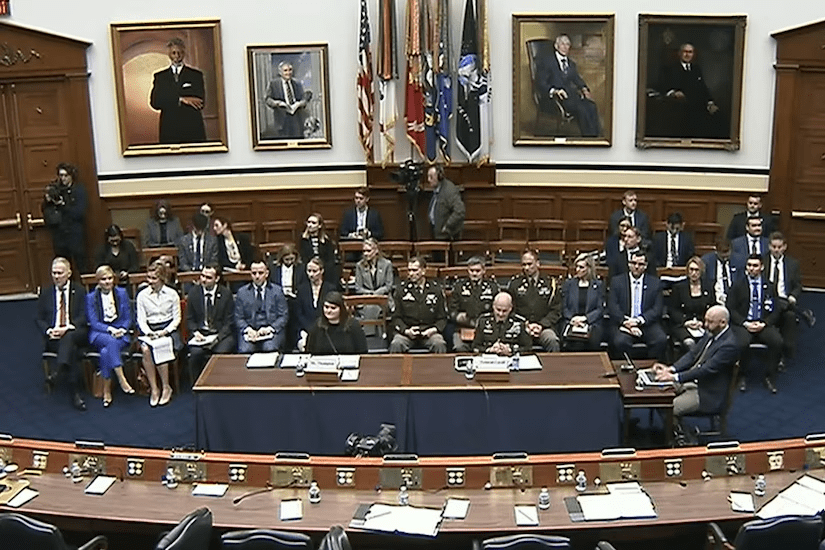
April 9, 2025 | By David Vergun, DOD News |  

China is undertaking an unprecedented military buildup, developing a large and advanced arsenal of nuclear, conventional, cyber and space capabilities, said John Noh, performing the duties of assistant secretary of defense for Indo-Pacific security affairs, who testified today at a House Armed Services Committee hearing in Washington.

Continue reading “China’s Military Buildup Threatens Indo-Pacific Region Security”
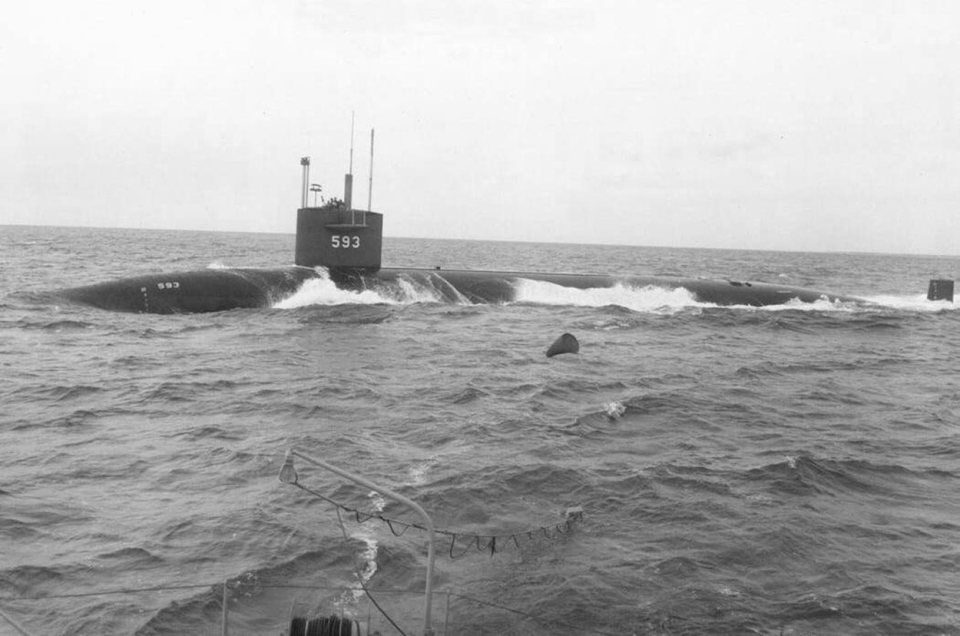
Beneath the Waves: The Story of USS Thresher

Beneath the waves on April’s morn,
A silent giant, sleekly born,
Did face the sea with purpose proud,
Its heart of steel, its fate unbowed.
Continue reading “Beneath the Waves: The Story of USS Thresher”

Honoring CTRCM Christopher L. Vertin, USN, 9th Force Master Chief

CTRCM(SW) Christopher L Vertin
United States Navy, Retired

Continue reading “Honoring CTRCM Christopher L. Vertin, USN, 9th Force Master Chief”

DOD Leaders Highlight Need for Increased NATO Defense Spending

April 8, 2025 | By David Vergun, DOD News |  

To ensure an effective alliance, NATO needs to generate and field forces necessary to provide credible deterrence, increase military spending and take the lead in supporting Ukraine’s defense requirements, said Katherine Thompson, performing the duties of assistant secretary of defense for international security affairs, who testified today at a House Armed Services Committee posture hearing in Washington.

Continue reading “DOD Leaders Highlight Need for Increased NATO Defense Spending”
Website Powered by WordPress.com.

Up ↑